Reviews
- "A thoughtful, intriguing and worthwhile book" - 5 stars (Tom Lichtenberg, Smashwords review)
- "[F]resh and interesting… a high quality work independently published by a literary writer" (Lisa Thatcher).
 "[R]eminded me of Julian Barnes, particularly 'The Sense of an Ending.' "- 5 stars (Heather Douglass, Smashwords review)
- "I have read a few self-published books before and have found them somewhat amateurish, in terms of both plot and, indeed, grammar. My goodness, your novel was refreshingly different, so much so I felt compelled to write to you. I found the novel very well constructed and written [,....] [e]specially the very effective non-chronological ordering, which enabled the various reveals to be well paced and timed [together with] the level of confidence and constraint exhibited throughout. " (J Geall - email review - reproduced with permission).
The reviews on Smashwords are thoughtful and detailed - they should give you a good sense of what the book is about and whether it is likely to be your "cup of tea." The same goes for the review on Lisa Thatcher's blog. The following are comments on the first few chapters from members of the peer review site youwriteon.com - although not reviews of the entire novel, I have included them to show reactions from a wider range of readers:
- "well written and teeming with interesting ideas"
- "very interesting and completely novel theme"
- "very readable...original and amusing"
- "an entertaining read"
- "fluent [and] witty"
- "fantastic... one of the best I have seen in a while."
criticism
And now - because there are usually at least two sides to every story - here are some criticisms/reservations:
 "I like redemptive stories, inspirational stories, adventures, and mysteries. [....]. I'm sorry but this book was depressing. [.....] To the author's credit the book has thought-provoking ideas about religion, the afterlife, technology, etc. Unfortunately, that wasn't enough for me." (2 star review on goodreads - they say you shouldn't respond to bad reviews, but in this case I couldn't help myself)
- "[A] well written tale [which] drew me in from the early pages [.....] [but] I felt the ending was a bit of a let down [....]. There was A LOT left unresolved [...]. I think if the ending were re-written [....] then this could be really great. At the moment this is unfortunately too downbeat." (Blobmonster, review on Smashwords). But other readers didn't have a problem with the lack of resolution at the end: "I for one found that having these threads left hanging was far more satisfying, and more realistic; after all, which of us knows how or even if everything we are involved in resolves itself?" (J Geall - email review).
- "If my mind were a jury [...] it would be split on one issue. Miles is vague about what he knows regarding EGnosis' beliefs for the first half of the book. Part of me can see this builds some suspense. Part says it felt like being held back by an invisible arm from tasting the thematic meat of the narrative." (Heather Douglass, review on Smashwords)
- "[A]t some points the story seemed a little constrained. For example, [.....] it wasn't immediately easy to see why and how [the protagonist fell in love with one of the other characters]. Also, the means by which Miles was able to track down [what happened to Kay and Pete] seemed rather condensed." (J Geall - email review, original comments edited slightly to avoid plot spoilers).
All feedback (good or bad) gratefully received - please email me at paulsamael@gmail.com.
The Singularity
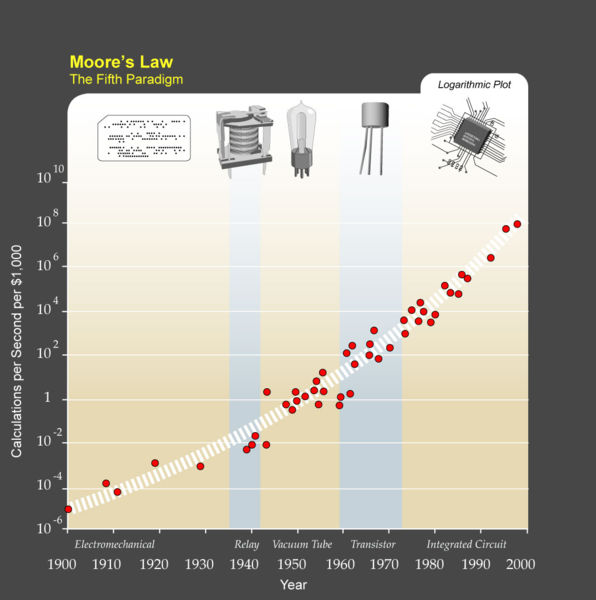
One of the ideas explored in the book is the notion of the Technological Singularity, which has recently started to get more mainstream attention (there are even several Singularity movie/documentary projects). You can find out more about this and various related ideas at the websites listed below.
Personally I have a slightly schizophrenic attitude towards the Singularity - a mixture of fascination and scepticism. If you find yourself in need of a little light relief from all this techno-utopianism, I strongly recommend that you check out Charlie Kam's song "I am the very model of a Singularitarian" (the last link below) - it's probably funnier if you've had a quick look at some of the other material first:
- Wikipedia entry on Technological Singularity
- The Singularity is Near (film/documentary)
- The Transcendent Man (documentary)
- The Singularity Film
- Aleph.se on the Singularity
- Kurzweil Accelerating Intelligence
- The Singularity Hub
- God in the Machine: my strange journey into transhumanism (from The Guardian)
- I am the very model of a Singularitarian
Internet cults etc

The internet cult in the book is a purely fictional creation - so far as I'm aware, the Singularity has yet to inspire a movement with the exact same beliefs and practices. It is a "composite" inspired by individual elements taken from various cults, quasi-religions and other spiritual movements, ranging from Aum Shinrikyo (at the more extreme end of the spectrum) through to the Autonomous Individuals Network, the Extropians, the Rosicrucians and Gnosticism.
I was also influenced by some of the ideas in Erik Davis' book Techgnosis and the idea of "revenge effects" or the unintended consequences of technology outlined in Edward Tenner's book Why Things Bite Back. And here's a blog post from 2017, which is about my thoughts on revisiting the links between technology and religion 5 years after publishing the novel.
But all these ideas form the backdrop to a story which is essentially about our tendency to believe what we want to believe - and the lengths we're prepared to go to in order to preserve those precious illusions.
It may also be the first ever novel to have several hundred words devoted to the intelligence of the blind cave fish and the occasionally carnivorous behaviour of the sucker fish or plecostomus (two species which are poorly represented in contemporary fiction).